

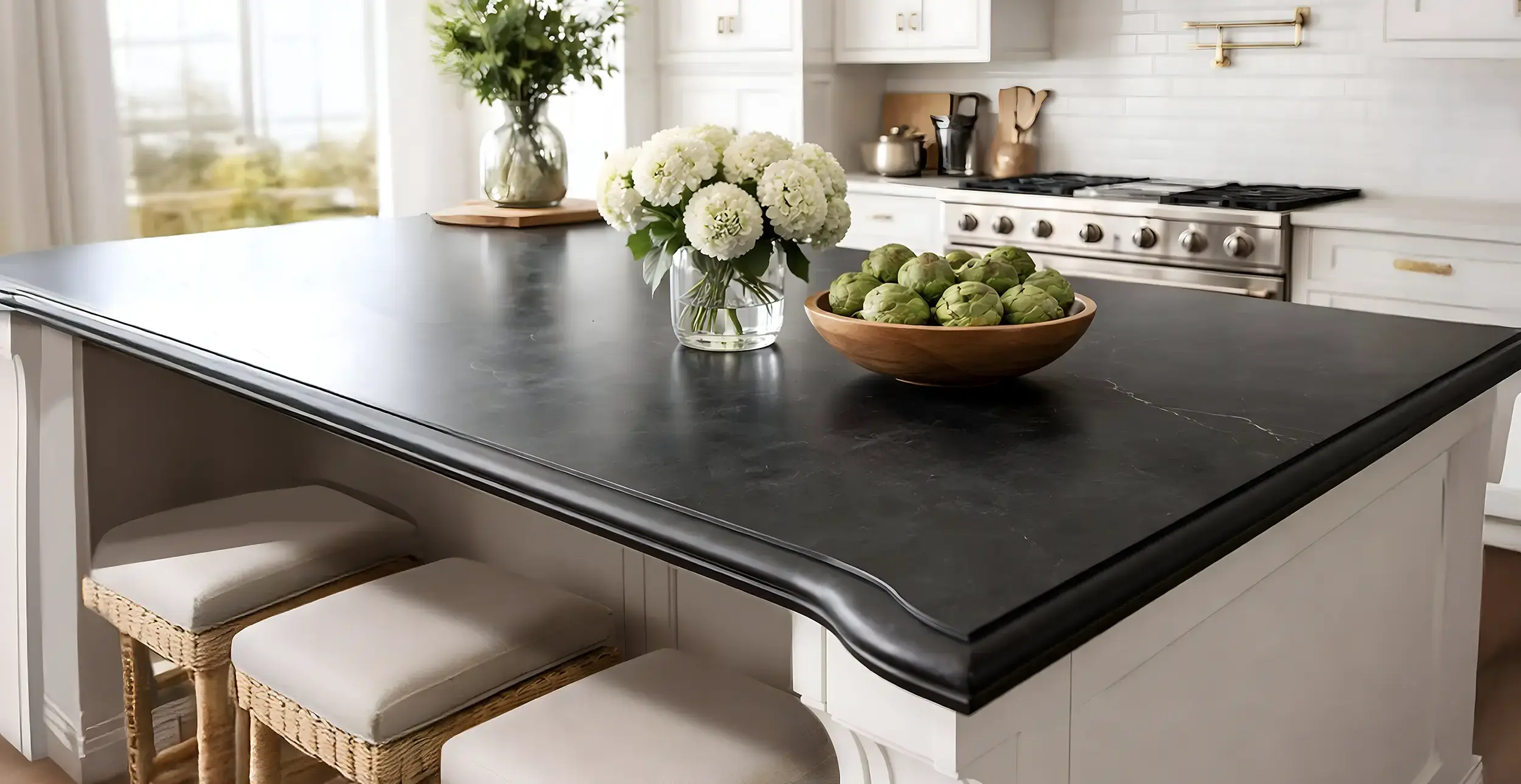
For lovers of classic kitchen design and natural stones that can develop that charismatic patina through time, soapstone countertops are the right one for you. This mineral has the right blend of softness and toughness great for creating sculptures and countertops.

The natural and antique beauty of this stone is comparable to granite and slate. For those who are used with a classic design with low maintenance level, soapstone is the best choice for you.
Soapstone is a natural metamorphic stone composed primarily of talc, which gives it a smooth, soft feel. Despite its softness to the touch, it is highly durable and has been used for centuries in laboratories, fireplaces, and kitchens.

Yes. Soapstone is exceptionally durable and resistant to heat, stains, and chemicals. It does not etch when exposed to acids such as lemon juice or vinegar, making it well-suited for kitchens and bathrooms.

Soapstone is softer than granite or quartz and can scratch with sharp objects. However, scratches are typically superficial and can be easily sanded out or blended with mineral oil, restoring a uniform appearance.

No. Soapstone is non-porous and does not require sealing. This makes it low-maintenance compared to many other natural stone surfaces.

Unlike many other natural stones, soapstone is available in a limited but timeless color range. Common soapstone colors include:

  • Black
  • Gray
  • Bluish gray
  • Green
  • Off-white / creamy white

Soapstone typically has less dramatic veining than granite or marble, giving it a more subtle and uniform appearance.

Yes. Soapstone naturally darkens with age and use. During fabrication and installation, mineral oil is often applied to jumpstart and even out the patina. Oiling enhances the stone’s depth and produces a rich, darker tone. Oiling is optional and aesthetic only. Many clients appreciate the patina that develops over time, as it adds character and depth.

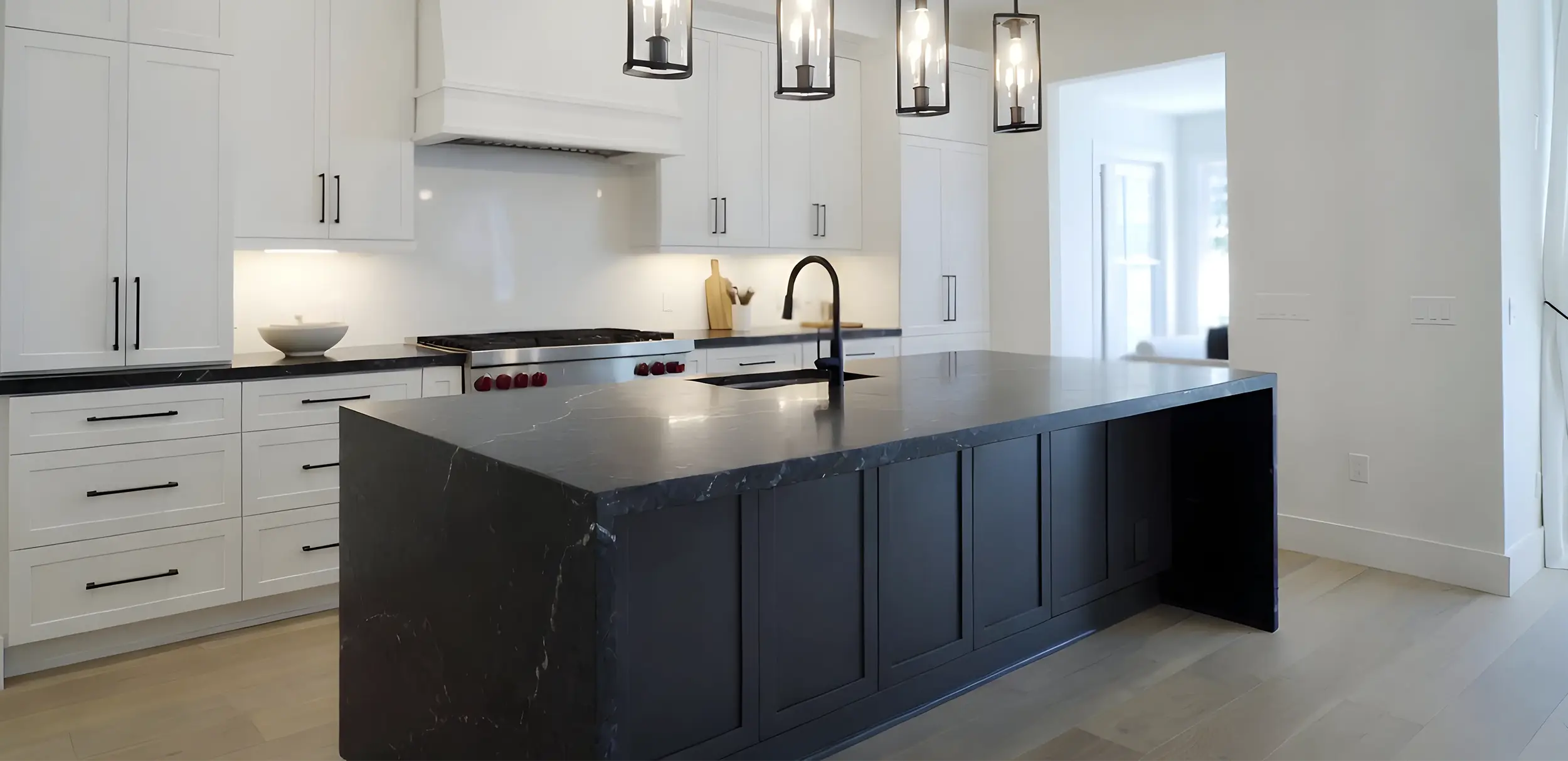
Black soapstone features a deep charcoal-to-black tone with soft, uneven veining ranging from white to light gray. It offers understated elegance and pairs well with both modern and classic designs.

Black soapstone is versatile and commonly used for:

  • Kitchen countertops and backsplashes
  • Waterfall islands
  • Bathroom vanity tops
  • Shower walls
  • Floors and accent walls

It can also be paired with marble to create contrast while managing overall project costs.

White soapstone resembles marble in appearance but offers better resistance to staining and etching. Its creamy white tone comes from its talc content and naturally darkens over time.

Veining is generally broader and more scattered than engineered stone. Vein colors range from light gray to darker gray, depending on the slab.

Higher-quality white soapstone slabs offer improved durability and finer veining. Precision Stone Design sources premium material to ensure longevity and performance.

Yes. Some soapstone slabs have a natural light green hue that deepens when oiled. Other soapstone varieties develop greenish undertones naturally as they oxidize over time.

Veining may range from thin to thick lines in shades of light green, gray, or darker green, giving each slab a unique appearance.

Absolutely. Soapstone is highly heat resistant and will not crack or scorch from hot pans or cookware. This is one of its most valued properties.

Yes. Because it is non-porous, soapstone does not absorb liquids and is highly resistant to staining from oils, wine, coffee, or other common household substances.

Soapstone is generally comparable in price to mid-to-high range granite and quartz, depending on slab availability, thickness, and fabrication details. Precision Stone Design provides transparent pricing during the selection process.

Yes. Soapstone performs very well in bathrooms due to its resistance to moisture, staining, and chemicals. It is commonly used for vanity tops, sinks, and shower benches.

Pros

  • Excellent heat resistance; will not scorch or crack
  • Non-porous and naturally antimicrobial
  • Highly resistant to stains
  • Develops a beautiful, antique-style patina over time
  • Scratches and dents can be easily repaired by sanding and re-oiling
  • Does not require sealing

Cons

  • Pricing is comparable to granite, often approaching $100 per square foot
  • Longer runs (6 feet or more) may require visible seams
  • Limited color options compared to quartz or granite
  • Periodic oiling is needed to maintain a darkened appearance
  • Softer surface can dent or scratch, though it resists chipping due to its pliability

Design
Quartz offers consistent patterns and customizable colors. Soapstone has limited natural colors but develops an irreplaceable natural patina over time.

Durability
Quartz is harder and more scratch-resistant. Soapstone is softer but more forgiving and less prone to chipping.

Heat Resistance
Soapstone outperforms quartz in heat resistance. Hot cookware can damage quartz surfaces.

Stain Resistance
Both are non-porous and resist stains and bacteria.

Maintenance
Neither material requires sealing. Soapstone may be oiled periodically for aesthetic purposes.

Design
Slate offers more color variation, including black, red, green, blue, and charcoal. Soapstone typically appears in black, white, gray, or green tones.

Durability
Both are durable metamorphic stones. Soapstone may scratch more easily depending on talc content.

Heat Resistance
Both materials handle heat well and will not scorch under normal use.

Maintenance
Both are low-maintenance and do not require sealing. Cleaning requires only mild soap and water.

Design
Granite offers more dramatic patterns and color options. Soapstone provides a softer, monochromatic look that works well as a design accent.

Durability
Granite is harder and more resistant to scratches. Soapstone is softer but more resistant to chipping.

Heat Resistance
Both materials handle heat exceptionally well.

Stain Resistance
Soapstone is naturally non-porous. Granite requires periodic sealing to maintain stain resistance.

Maintenance
Soapstone requires less long-term maintenance than granite and is unaffected by acids.

Yes. Soapstone performs very well in outdoor kitchens due to its durability and weather resistance.

Benefits of soapstone for outdoor use

  • Excellent heat resistance
  • Color stability in harsh climates
  • Non-porous and moisture-resistant
  • Highly stain resistant
  • Lower maintenance than many outdoor materials
  • More affordable than several premium alternatives

Daily care involves cleaning with a mild dish soap and water using a non-abrasive cloth.

Oiling is optional and aesthetic. If desired, mineral oil can be applied every 1–3 months to maintain an even, dark appearance. Beeswax or a beeswax–linseed oil blend can also be used and lasts longer than mineral oil.

Minor scratches can be sanded with fine-grit sandpaper and re-oiled.

  • Use 120-grit sandpaper for deeper scratches
  • Finish with 220-grit for smoothing

Yes. Precision Stone Design specializes in custom fabrication, including integrated sinks, drainboards, waterfall edges, and custom profiles tailored to your space.

Soapstone is ideal for clients seeking a natural, timeless surface with minimal maintenance and excellent performance. Our team at Precision Stone Design will help you evaluate whether soapstone aligns with your design preferences, lifestyle, and budget.

SOAPSTONE SURFACE CATALOG